
Telecom · 5 min read · Daria Boiko
Is D2D Going to Replace Mobile Networks?
Physics, spectrum and economics point to D2D as a powerful extension of terrestrial mobile coverage—not a replacement.
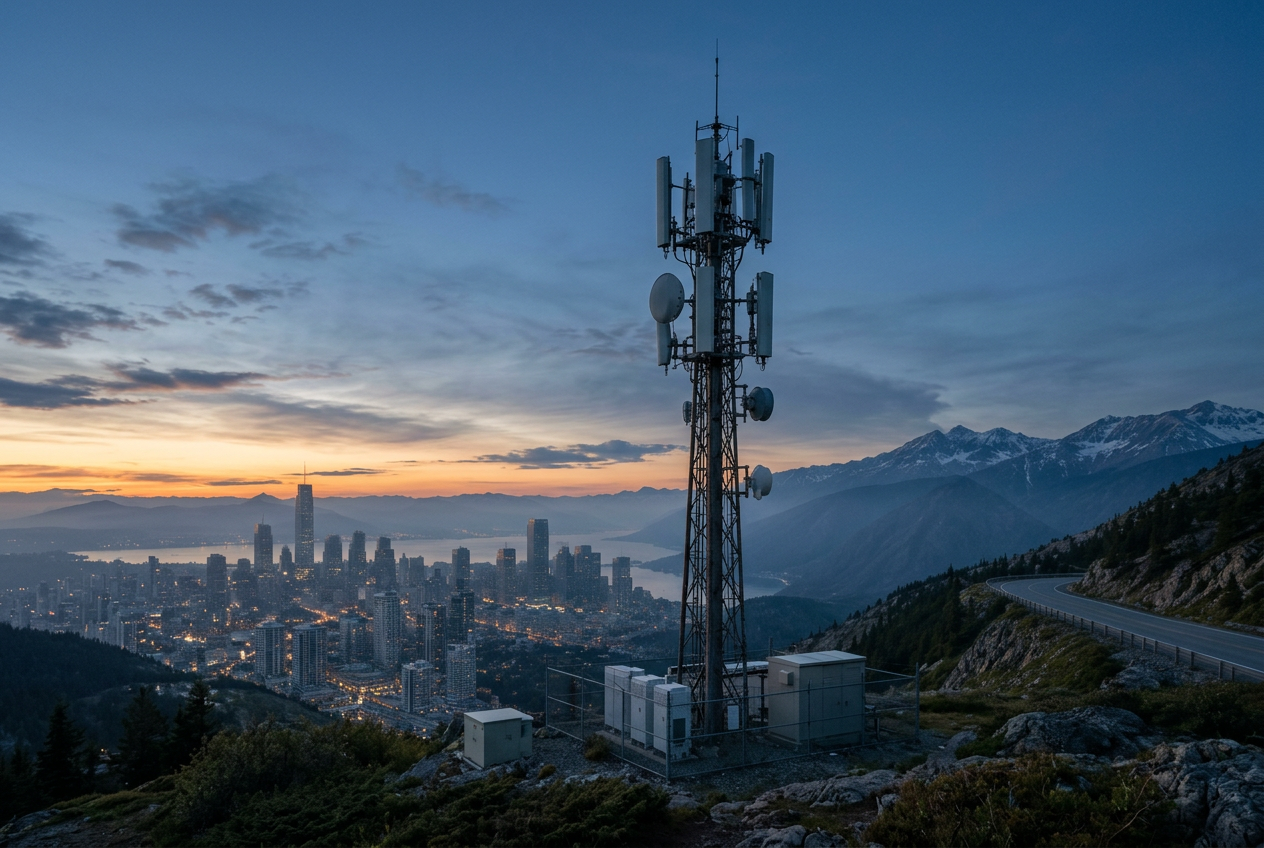
No. Physics does not work that way. A phone can be a few kilometres away from a terrestrial tower. A satellite? Hundreds of kilometres away. What does that imply? Bingo: signal loss. Adding more satellites does not close that gap. It is a distance problem, not a capacity problem.
But it is not just distance. Satellite beams cover huge territories, shared across thousands of users at once. And indoor coverage? Minimal to non-existent.
Going outdoors to check your LinkedIn feed? Sure, on a sunny day in May. Come talk to me in February in Siberia. This is not a ‘better satellites will fix it’ problem. It is the nature of beaming a signal from orbit versus a tower a kilometre away.
The number that says it all: T-Mobile’s actual satellite traffic through T-Satellite so far is 0.002% of its network. Not because the technology fails, but because it is being used for exactly where and when it fits: zero-coverage moments and areas. I would not bet on exponential growth here anytime soon.
There is a business logic to this too. Terrestrial carriers own spectrum in the hundreds and up to roughly a thousand MHz. EchoStar’s spectrum acquired by SpaceX: about 65MHz. D2D providers are bidding for more, but is that gap closing anytime soon?
Carriers are already marking their territory. In the US, AT&T, T-Mobile and Verizon agreed in May to pool spectrum for dead-zone coverage to unify the D2D approach. Yet each still keeps its own separate satellite partner.
None of this makes D2D pointless. It sharpens exactly where it wins: remote and unpopulated areas, maritime and disaster zones—the places a GSM tower never made economic sense in the first place. A fantastic extension. Not a replacement.
The replacement story is a myth. The coverage layer terrestrial networks were never going to fill on their own is the reality. Same satellite logic as always, just new form factors, timelines and addressable markets. Every serious player in telco is watching this space and building to integrate with their towers, not fight them. Different approaches in different regions, but quite similar goals. Which route will get us to the new normal first?