Telecom · 6 min read · Daria Boiko
The Four-Way Value Chain in D2D Nobody Talks About
D2D is not simply satellites talking to phones. Its business model runs through four links—and only one is difficult to replace.
Everyone talks about D2D as ‘satellites talking to phones’. That’s not the business. The business is four links, and only one of them is hard to replace.
The satellite operator owns the spacecraft and the spectrum lease. It is capital-intensive, with long lead times.
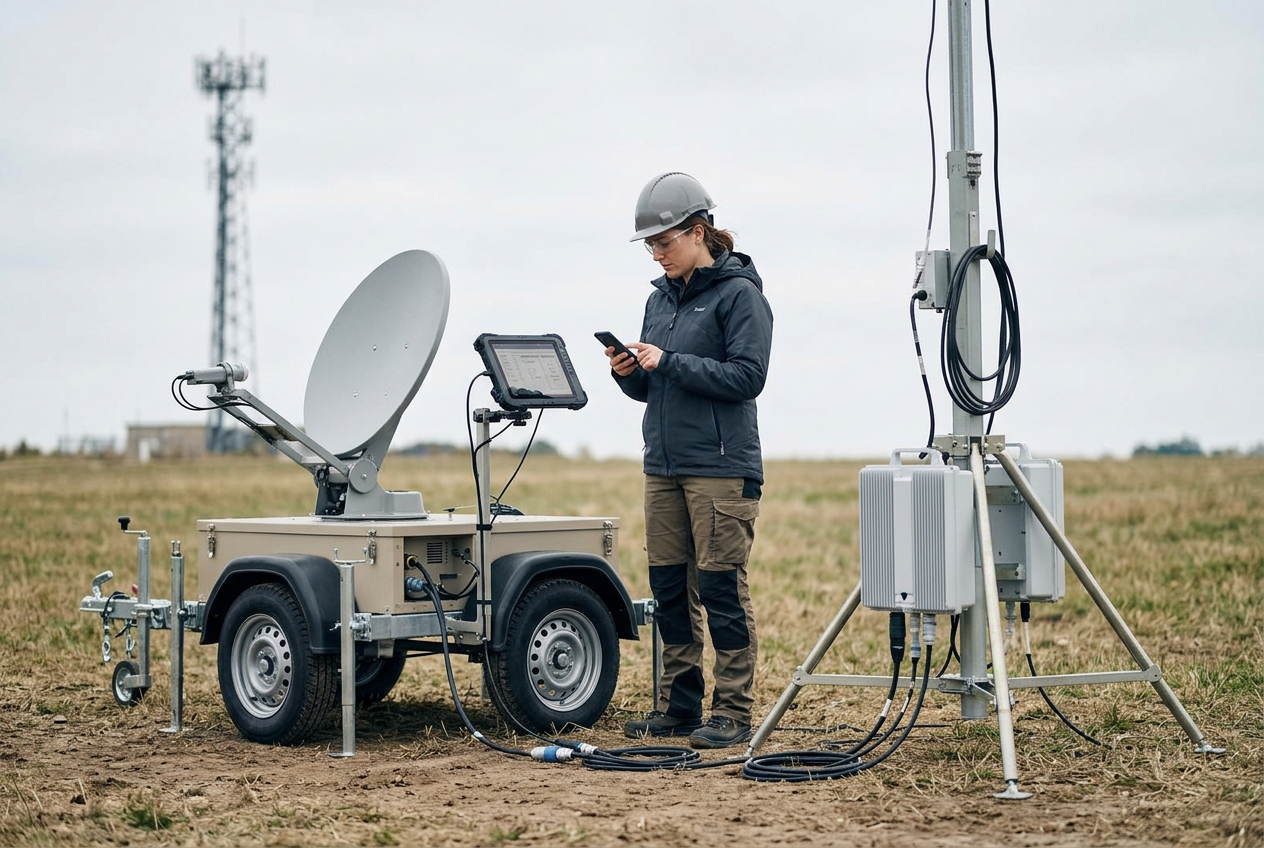
The NTN platform is the 3GPP-compliant layer that makes satellite look like just another cell to a standard phone. This is where the integration risk lives.
The MNO owns the SIM, the billing relationship and the customer. This is who the subscriber thinks they are paying—and the hardest asset to displace.
The chipset or device maker decides which phones can even talk to a satellite in the first place.
Strip away the announcements and ask one question: who is replaceable and who is not? Satellite capacity is becoming commoditised. NTN platforms are converging on the same standard. Chipsets are standardising too, but still ship on the biggest device makers’ terms. The MNO keeps the customer.
Watch out for the satellite operator trying to become the MNO instead of staying in its lane. Whoever controls dedicated spectrum keeps the leverage. SpaceX alone holds roughly 65MHz and told the FCC in August it wants more. Amazon paid USD 11.6 billion to acquire Globalstar, spectrum rights included—a price that was effectively a bet on the spectrum, not the satellites.
That control does not have to mean sole ownership. Equatys is Viasat and Space42’s attempt at an alternative: tower-company logic. Share the infrastructure, keep your own spectrum and customers. The founders are the anchor tenants; any MNO can join the wholesale capacity without equity.
A genuine fifth link, or two large players pooling resources? It depends on real independence—and a third contributor showing up.